
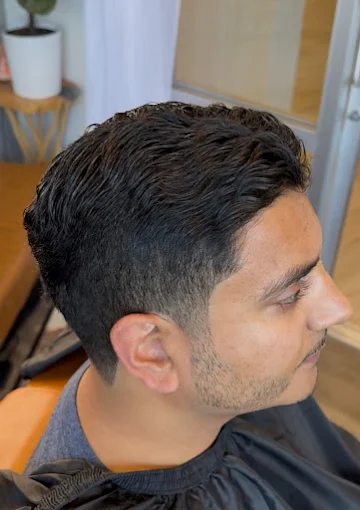
There’s a special kind of confidence that comes from a beard that’s actually maintained versus a beard that just isn’t. If your current beard routine consists of “trim it when it starts itching” or “hope for the best,” we need to talk.
Creating a great beard is not merely a stroke of luck or a natural gift; it’s about knowing your beard growth pattern, using the correct technique, and getting a shape that actually suits your face. And the good news is none of this requires you to become a grooming expert overnight. You just need to know what to ask for and who to trust with the clippers at a barbershop in Somerset.
Myth #1: “A Beard Just Needs Time”
The growth of beards is patchy, and while some grow faster than others, this happens at different rates across the jaw, cheeks, and neck, and most guys experience a rough “in-between” stage around 3-6 weeks, which looks more scruffy than intentional. That is exactly where a skilled barber earns their keep: shaping around the patches you have, cleaning up the neckline so it doesn’t creep up toward your chin, and utilizing smart trimming angles to give the impression of fuller density.
The difference between growing a beard and actually building one. After years of working with various types of facial hair- thick, patchy, curly, coarse- the barber gets a good sense of which technique will work on which hair. It’s not guesswork; it’s about experience and recognising patterns, and that’s evident in the final line-up.
Myth #2: “Any Trim Length Works on Any Face”
Beard length and face shape need to talk to each other. A longer and fuller beard can help to enhance narrow faces, and a shorter and tighter beard can complement rounder faces without giving the impression of being too large or bulky. The neckline placement matters just as much; too high and it looks unnatural, too low and it looks unkempt.
Myth #3: “Hot Towels and Oils Are Just Extras”
They aren’t only reserved for spa days (although that’s a nice bonus). A hot towel opens up the pores to soften skin and hair before cutting or shaving to create a smooth and comfortable haircut. Beard oil isn’t just about smell; a good one conditions the skin underneath, reduces itchiness during the growing-out phase, and keeps flyaway hairs looking tamed instead of wiry.
Skipping these steps doesn’t ruin a haircut, but including them is what separates a rushed five-minute trim from a full grooming experience. Just a few minutes of your time, which you’ll reap rewards of for the next few weeks.
Where This All Comes Together
If you’re searching for a good barber shop in Somerset, the real test isn’t how fast they can get you in and out; look for a place that can take time to trim your beard around your growth style, jawline, and lifestyle.
This is exactly the kind of detail-first approach that Fresh Factory Barbershop does: they treat a beard trim with the same precision as a new haircut, rather than as an afterthought tacked onto a haircut. And when it comes to a very reliable place for a decent haircut for men in Somerset, NJ, going with a properly trimmed beard is honestly the easiest upgrade you can make to your overall look.
The Takeaway
Having a good beard is not a matter of waiting it out; it’s about shaping, maintaining, and trusting someone who has done it enough to know where to trim and when it needs to be left alone. Skip the trial and error and sit in the chair and let the professional barber do what they do best for a good haircut for men in Somerset, NJ.
FAQs
1. How often should I get my beard trimmed to maintain shape?
It is recommended that a clean neckline and even length are maintained every 2-3 weeks. Waiting much longer usually means starting from scratch on shaping again.
2. Will a hot towel treatment help with beard itch?
Yes, the warmth softens the hair and opens pores, making trims cleaner and reducing post-trim irritation. It is particularly beneficial in the early stages of growing out when it is itchy!
3. Can a barber help fix a patchy beard?
Definitely, patchy areas can often be strategically trimmed and shaped to look fuller and more intentional. It’s less about “fixing” patches and more about working with them skillfully.